

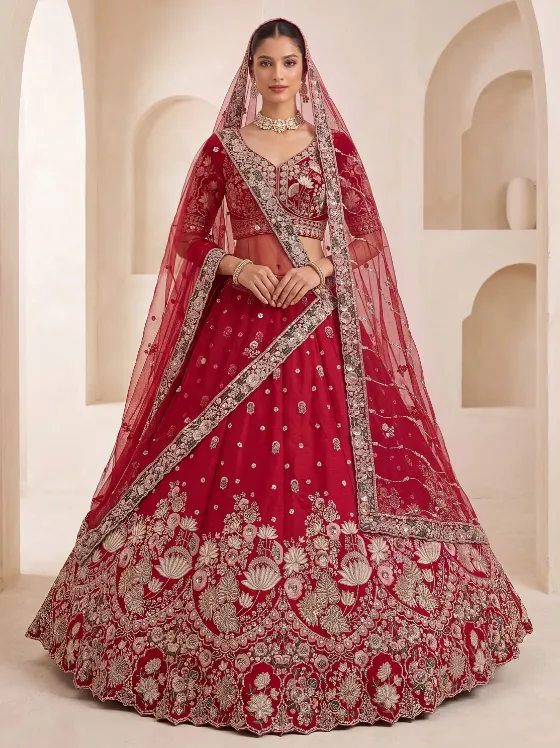
A tailor standing beside you can see exactly where you want the skirt to sit. A tailor reading an order form sees a number in a box marked “waist”. Those two measurements can be inches apart. If you began with the search “bridal lehenga buy online”, the most useful step after saving a design is to read its measurement guide with a tape in hand. A few careful notes will tell the person stitching your outfit things a dress size never could.
Read the Size Chart Labels
Look for the words “body measurements” or “garment measurements” above the size chart. A blouse measuring nineteen inches across the bust when laid flat has a finished circumference of roughly thirty-eight inches. That figure includes the room the maker left for you to breathe and move. Entering it as your own bust measurement could give the tailor the wrong starting point. If you like how an existing blouse fits, send its measurements separately and label them as a reference garment.
Decide Where the Waistband Sits
Tie a narrow ribbon where you want the top of the skirt to rest. Stand naturally and have someone check that the ribbon is level at the back. Measure around it, then sit down briefly to see whether that position still feels comfortable. If the order form asks for your natural waist and you prefer a lower waistband, supply the requested measurement and explain the difference in a note. Keep the ribbon in place until you have also measured the skirt length.
Measure With Your Wedding Shoes
Put on the shoes you plan to wear and ask your helper to measure down from the ribbon, following the seller’s instructions for where the tape should end. Bending forward to read it yourself can shorten the measurement. One organza set in the Bridal Lehenga Choli collection lists a skirt length of 43 inches and has embroidery along the hem. If you need a shorter skirt, ask before ordering whether the maker can adjust it at the waist and preserve the border.
Follow the Blouse Diagram
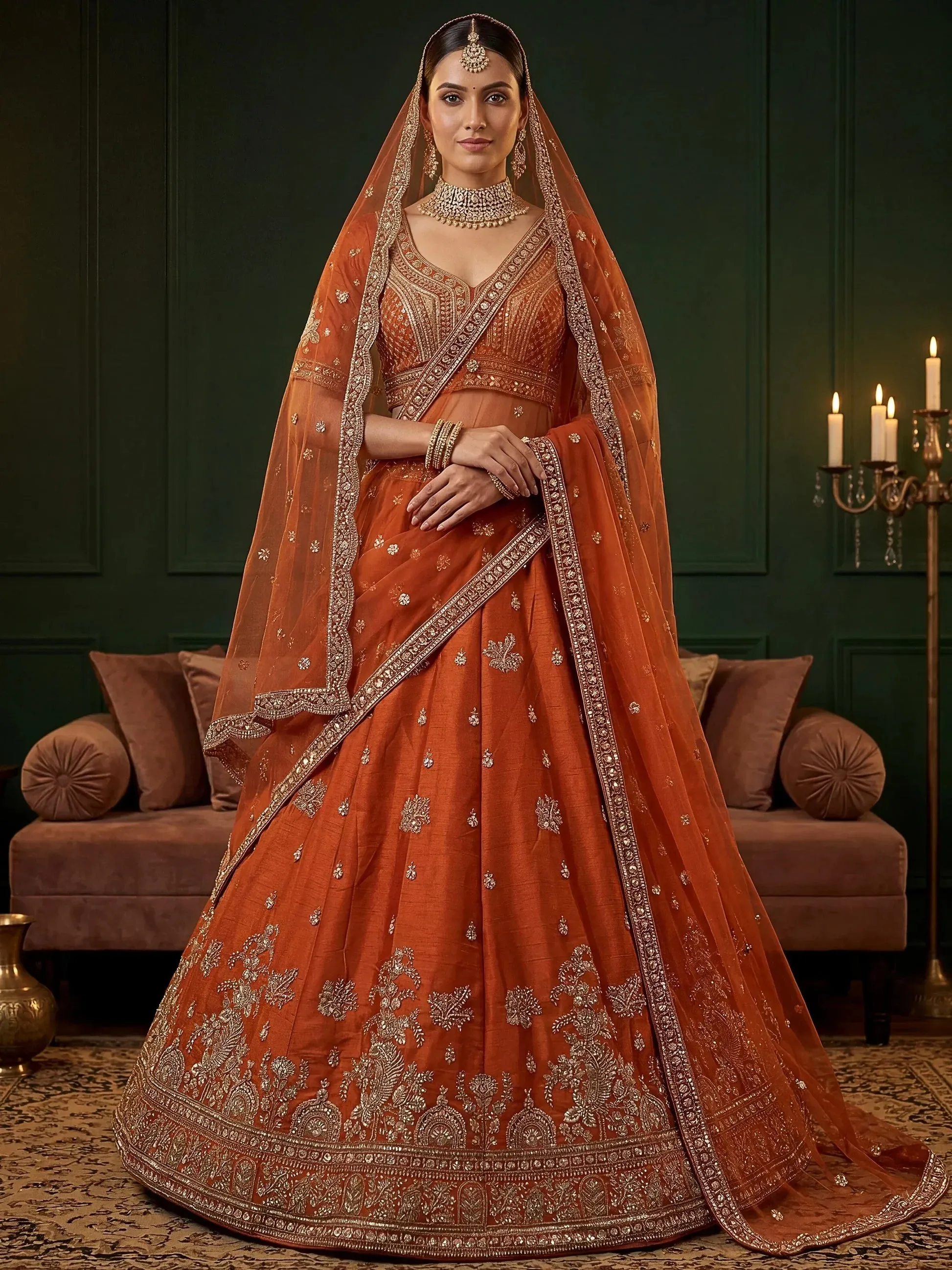
Blouse length is especially easy to misunderstand over a message. One measuring guide starts the tape where the neck meets the shoulder for blouse length, but at the outer shoulder tip for sleeve length. Starting both at the same point could leave your sleeves longer than you intended. Wear the bra you plan to wear on the day, follow the diagram for each measurement and ask someone else to read the tape. Keep these details together for the person doing the stitching.
-
Units used throughout the form.
-
Waistband position relative to your navel.
-
Skirt length in your wedding shoes.
-
Blouse length from the specified starting point.
-
Sleeve length from shoulder to cuff.
Allow Time for the Stitching
A semi-stitched skirt and an unstitched blouse can arrive in the same parcel. Read the description for the option you selected, even when the model is wearing a finished outfit. If a local tailor will make the blouse, check their availability for the week the parcel is due. If you select custom stitching, confirm when the maker needs your measurements and when the finished set should reach your address. Leave time before your departure to try all three pieces on together.
Read Back the Numbers
Before you approve the order, read the figures back in a different order from the one you used to take them. Start with the sleeve and finish at the waist. It is easier to spot a skirt length entered in the hip field when you have to name what each number describes. Keep a copy of the completed form and any agreed changes. If the tailor later calls about a figure, you can both refer to the same dated set of measurements.
Conclusion
When the parcel arrives, put on the full outfit with the shoes and underlayers you used for measuring. Stand in front of a mirror, sit as you expect to during the ceremony and walk a few paces. If something needs attention, describe what happens as you move. “The front hem catches under my right shoe” gives a tailor a clearer place to start than “the skirt feels long”. Take that observation to the fitting so the tailor can see the problem for themselves.